

- On 15 August 2025 the National Union of Metalworkers of South Africa (NUMSA) called on all workers at Goodyear South Africa who were affected by the looming closure of the plant to attend a General Meeting at Goodyear South Africa (GYSA) in Kariega.
- The purpose of the meeting was for the leadership of the union to give a report on the outcomes of the Section 189A consultations that took place on the 14th of August 2025. The meeting of the 14 August 2025 took place against the backdrop of GYSA’s resistance to improve the lump sum offered to workers which was a lousy R50 000 and two weeks for each completed year of service. This position NUMSA rejected with the contempt it deserves.
- Whilst NUMSA strongly disagrees with GYSA in respect of the closure of its Kariega Manufacturing Plant, given that the plant is in fact quite capable of being saved, but GYSA is not interested in doing so in that it simply gives effect to the corporate decision of its parent company to shift all production volumes from South Africa to Europe – and as such GYSA is on record that it is not interested in engaging in discussions on “profitability” and the volumes required to reach “break-even point” – NUMSA accepted the objective reality that GYSA is intent on closing its manufacturing operations at all costs.
- As such, NUMSA proceeded to engage with GYSA in the formal Section 189A Facilitation process relevant to appropriate severance packages to be paid to the workers who are now confronted with unemployment in a severely depressed economy. NUMSA succeeded in attaining a substantial improvement on the grossly unfair bare minimum package which GYSA wished to impose on these workers despite their years of loyal service. The more pertinent improvements attained were increasing severance pay from two weeks’ remuneration per completed year of service to four weeks’ remuneration, in addition to GYSA also paying each worker a lump sum of R100,000.00. Accordingly, a settlement agreement was concluded with GYSA during the evening of Friday, 15 August 2025 incorporating the agreed package, being the following:
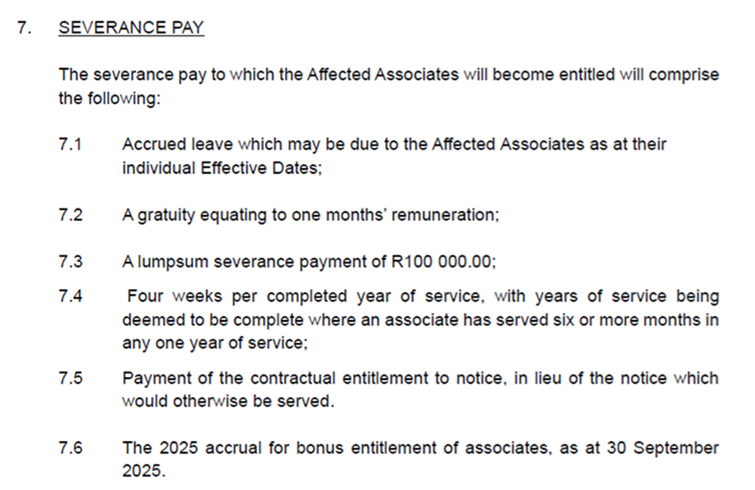
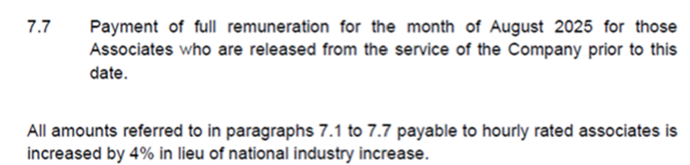
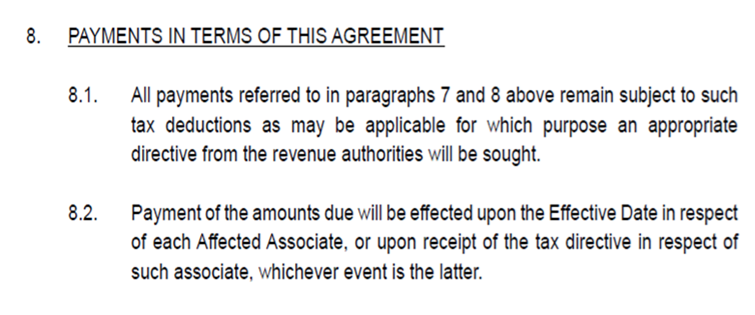
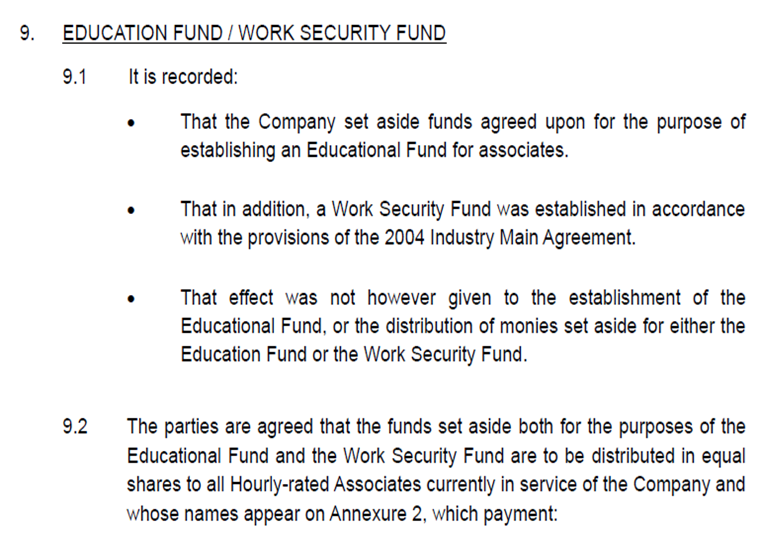
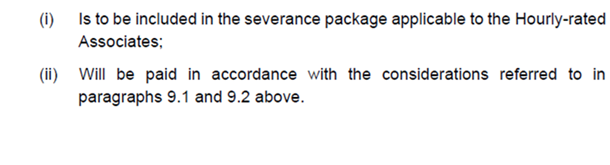
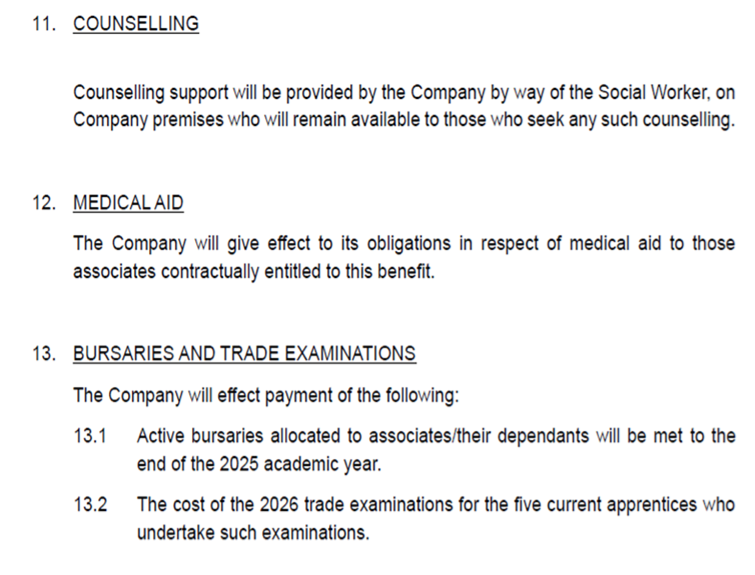
The impact the aforesaid package will have on the different categories of worker in terms of their length of service is illustrated by the following:
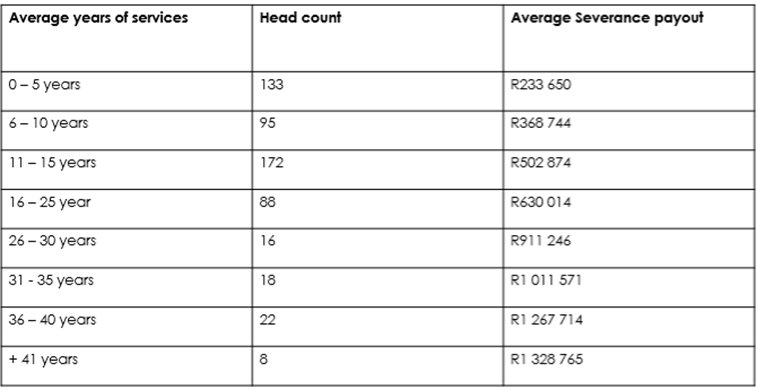
a) There are 552 NUMSA members at Kariega plant. Out of this number, 355 members (or about 65%) would get an average of R500 thousand.
b) NUMSA members with zero to 5 years’ service will get a severance package averaging R234 thousand.
c) 64 of NUMSA members who have 26 years or more service years, will get an average package of over a R1 million.
d) NUMSA also succeeded to push GYSA to agree that 17 workers that were on fixed term contracts must also benefit from the negotiated package.
e) 35 workers contracts were renewed and extended by GYSA as they will continue to work post the plant closure, and the rest of the workers who also benefited to the quantum of the negotiated package were non-unionised workers, which takes the number to 707.
- Whilst GYSA adamantly insisted on removing all its intellectual property and is also not prepared to consider donating its manufacturing facility towards an endeavour to secure an investment by government or a third party as to ensure an ongoing production facility in Kariega with the concomitant protection of jobs, it ultimately agreed not to dispose of its property and whatever other assets fall outside of its claimed intellectual property for a period of two months, as to enable NUMSA to further pursue discussions with Government and third parties in an attempt to save the manufacturing plant. To this effect, with the support of national government (DTIC in particular), IDC has made an expression of interest to Good Year to take over the plant infrastructure and both government and NUMSA we are busy looking for strategic partners that can invest and take over the plant with the intention of saving the jobs that have been lost as the result of Good Year’s decision to close the plant.
- In this regard, given the wider adverse impact GYSA’s decision will have on the entire Kariega/Gqeberha communities and on the downstream industries, as well as the South African tyre manufacturing sector in terms of backwards and forwards linkages as a whole, NUMSA shall do everything in its power to ensure that an alternative solution is found to the otherwise catastrophic impact GYSA and its global parent company’s unscrupulous decision will have on South Africa and ordinary workers.
- NUMSA, as a union, appreciates the positive response received from government in agreeing to present a united front, with NUMSA, in exploring ways to save this strategic plant. However, we must emphasise that the closure of GYSA sets a dangerous precedent in our country’s history. As such, we not only condemn this decision by GYSA, but we also strongly urge government to take decisive measures to protect South Africa’s existing manufacturing capacity as the possibility exists that other companies can do the same, where they close their manufacturing and only maintain their distribution network, as a mechanism to dump tyres in South Africa.
NUMSA’s position on what is to be done to position the manufacturing sector
- We call on government to increase tariffs across the automotive, tyre, steel, and engineering sectors. Given that National Treasury has already passed the Public Procurement Act with the goal of supporting manufacturing and industrialisation, it is essential that National Treasury must move swiftly to introduce public regulations to implement this Act. This is critical if we are to use procurement as a tool to drive localisation and designation through our public procurement processes.
- NUMSA firmly believes that government must act without hesitation to protect what remains of our manufacturing base. This can be done by imposing tariffs, setting clear standards for homologation, and, in particular, addressing the current crisis of tyre dumping. Just as the state previously intervened to address the crisis in the scrap sector, it must now act decisively to tackle the dumping of tyres and carbon black in our economy. We urge government to move quickly to ban the importation of tyres and carbon black into our local market.
- Furthermore, government through SARS must take a strong stance against multinational companies engaging in transfer pricing and profit shifting. These practices make it easy for companies to extract money from South Africa through schemes that avoid tax. Companies that benefit from government incentive schemes intended to protect and create jobs must be held accountable.
- In the auto sector, we also draw attention to the fact that 65% of vehicles in the local market are imported with zero local content. Given the volumes of vehicles being brought in by brands with no local manufacturing presence, and thus no contribution to quality, living wage jobs, it is time for government to require that foreign brands seeking market access establish assembly plants in South Africa and employ local workers to manufacture vehicles and components.
- NUMSA’s position, which we raised at the recent NACCAM show in Gqeberha, is based on evidence and industry modelling. When the initial Master Plan was introduced in 2018, our analysis showed that even a 5% increase in localisation could translate into R30 billion in new component production opportunities. Yet instead of seizing these opportunities, we are now scrambling to replace lost export markets such as last year’s R4 billion export market to the USA. Government should therefore attach tighter conditions to the incentives it provides, making increased local content a non-negotiable step toward the 60% localisation target, while also continuing to pursue export opportunities.
- NUMSA calls on the National Treasury to move swiftly and review the ad valorem tax levels with a intention to ban it, as it has remained unchanged for over 25 years, militating against growth in the domestic market in the transition from combustion engines to electric vehicles such a decision will go long way in growing the South African Market as more people will buy cars without this unnecessary taxation.
- NUMSA calls on government to act urgently in the steel sector to support primary steel production, particularly AMSA. Increased production volumes are essential to lowering the cost per ton, which requires curbing imports-either through banning (which is not viable) or implementing anti-dumping measures. Between July 2024 and January 2025, 1.4 million tons of steel were imported, and while a 9% safeguard was in place, importers claimed refunds from SARS and profited from previously sold stock. Companies like Macsteel are retrenching +-300 workers now, which imported less, and companies like Allied Steel which imports nothing have received a raw deal, they bear the brunt of the policy failure. Declining demand, worsened by cheap imports, which have triggered a job loss bloodbath in terms retrenchments. As the result the manufacturing sector is confronted by retrenchments and plant closures.
- Politically and ideologically, NUMSA is clear. NUMSA has never shied away from challenging government when decisions negatively impact the economy, workers, or the country as a whole. However, our stance has never been to provoke conflict for its own sake. Our position is rooted in the realities faced by workers. At this moment, what is needed is unity behind a transformative agenda, one that prioritises a strong industrial policy and inclusive, manufacturing-driven economic growth. Only through this approach can we truly shift power relations and build a non-racial, non-sexist democracy where all South Africans, black and white, have fair access to land and employment. This is fundamental to addressing the ongoing challenges of poverty, unemployment, and inequality.
- We hope not to be misunderstood, but the facts remain. The country has been led into a state of collapse by the neoliberal agenda and the Washington Consensus. These same policies are why figures like Trump are imposing tariffs globally without a coherent industrial policy, plunging American workers into poverty, unemployment, and inequality. It is this neoliberal agenda, together with austerity measures, that has driven de-industrialisation in both the USA and South Africa, fuelled by the misguided notion that the state has no business in business, while hollowing out the state and ceding development to the market.
- This is at the root of the consistent collapse of all our state-owned enterprises, such as Eskom, Transnet, SAA, the Post Office, Denel, and AMSA (formally Iscor – a South African SOE). The threat to the entire manufacturing sector is clear, given the critical role of primary steel in driving industrialisation. If the country truly understood what is at stake, the power crisis in May, when Eskom’s rolling blackouts should have been a wake-up call, would not be dismissed. The fixation on renewables did not just destabilise our own grid, it also brought down Spain grid, proving there is no immediate substitute for reliable dispatchable energy. If we are serious about championing industrialisation and manufacturing, we must fix Eskom and immediately reconnect all 17 generating units at Komati, Grootvlei, and Hendrina coal power stations to restore reliable electricity supply. At the same time, Transnet must move with speed to restore our rail network so that it is on the cutting edges to move both raw material and finished products to the market.
- There is not replacement for government to take ownership and control of all our countries commanding heights, all out minerals to beneficiate them, build new sectors at the back of them to drive manufacturing and industrialisation and build an inclusive economy.
This press conference has been called not only to inform the public and our members about the latest developments regarding the closure of the GYSA plant, but also to address the broader risks confronting South Africa’s manufacturing sector. The decision by Goodyear and its parent company to close the Kariega plant is a direct blow to workers, their families, and the local community, but it also threatens the future of manufacturing in our country. NUMSA wants to make it clear that we will continue to do everything within our power, in partnership with government and strategic stakeholders, to secure sustainable solutions that protect jobs and safeguard the future of this plant.
NUMSA stands firmly with workers, remains committed to defending their rights, and will continue to demand accountability at every level. We demand that industrialisation, job creation, and economic justice remain at the centre of all national policy decisions. The risk of deindustrialisation is no longer a distant threat; it is a reality we are already facing, made worse by rising unemployment and economic hardship for workers. We call on government to act with urgency and determination to develop and implement an industrial strategy that not only prevents further disinvestment, but actively supports the recovery and growth of our manufacturing sector.
Ends.
Issued by Irvin Jim
NUMSA General Secretary
For more information, please contact:
Phakamile Hlubi-Majola
NUMSA National Spokesperson
083 376 7725
NUMSA Contact Details:
Tel: 011 689 1700
Facebook: https://www.facebook.com/NumsaSocial
Twitter: @Numsa_Media
Website: https://numsa.org.za
PDF DOWNLOAD: NUMSA Press statement on the closure of Goodyear South Africa